Office clearance in Wallington for practical, organised workspace removals

Office clearance in Wallington needs to be handled with care, clear planning and an orderly approach to removal. We provide a service focused on clearing office furniture, fixtures, general contents and mixed workplace items so that rooms can be returned to use or prepared for the next stage of a move, refurbishment or handover. The work is carried out with attention to access, separation of reusable items and responsible handling of materials that are no longer needed.
In many offices, the most useful clearance is not simply about taking everything away at once. It is about removing the right items in the right order, protecting anything that stays behind and avoiding unnecessary disruption. We can deal with individual rooms, suites, storage areas and larger commercial spaces, always aiming to keep the process straightforward for the people managing the premises. If you need to clear an office in Wallington, the aim is a tidy, controlled result rather than a rushed emptying of the space.
Our office clearance work can cover desks, chairs, filing units, cabinets, reception furniture, shelving, monitors, IT peripherals and assorted office contents. Where there are mixed items, we work systematically so that usable equipment, confidential paperwork, recyclable materials and general waste are not treated as if they were all the same. That approach helps clients decide what should be retained, what can be removed and what requires separate handling. Pricing and quotes can be discussed once the scope of the clearance is clear.
Office furniture and workstation clearance
Office furniture often forms the main part of a clearance job, especially where a premises has been reconfigured, downsized or vacated in stages. Desks, pedestal units, conference tables, visitor seating and storage cabinets each need a slightly different approach because of weight, fixings and access. We remove these items in a way that aims to protect doorways, floors and remaining fixtures while keeping the workspace safe enough for other people to move through.
Workstation clearances may also include small items attached to or stored around desks, such as cable baskets, task lights, under-desk units and modest amounts of office clutter. When there are dismantling requirements, it is often useful to separate what must be broken down from what can be carried out intact. That decision can affect time on site and the ease of moving the furniture through lifts, corridors or shared entrances. Furniture clearance is a useful related service where larger pieces need careful removal.
Items commonly handled in an office clearance
- Desks, meeting tables and reception furniture
- Office chairs, visitor seating and stools
- Filing cabinets, cupboards and shelving
- Small office accessories and loose contents
- Broken, outdated or surplus workplace furniture
Electronics, filing and general contents
Alongside furniture, offices usually contain a wide spread of smaller items that can slow down a clearance if they are left until the end. Files, stationery, small appliances, display materials, packaging and desktop equipment all need to be assessed before removal. Some items may be reusable, some recyclable and some suitable only for disposal, so the work is more efficient when it is approached in clear groups rather than as a single bulk removal.
Where filing and records are involved, the priority is often to keep a clear distinction between ordinary office waste and material that may need to be reviewed separately before anything is removed. This is especially important in workspaces with shared storage, archive cupboards or mixed-use rooms. We can remove general contents once decisions have been made about retention, but the office team should still take the lead on confidential or sensitive material. Business waste removal can support broader non-confidential clearances where regular commercial waste is part of the job.
It usually helps if the main contact for the premises identifies any items that are staying, any that need to be separated and any that should be moved in a particular order. That does not need to be a complicated process: a simple list, a few photographs or a walkthrough of the rooms is often enough to show what is involved. Contact us to outline the space and the type of clearance you need, then we can discuss the best approach.
Clearance for vacant, moving and refitted offices
Office clearance is often linked to a move, lease end or refit, and each of those situations comes with its own priorities. A moving office may need selected items taken away in phases, while a vacated office may require a fuller strip-out of loose contents. A refit can sit somewhere between the two, with the emphasis on removing what the contractors need out of the way while leaving anything to be retained clearly identified.
Because different commercial premises use different layouts, the practical detail matters. Narrow stairwells, shared entrances, loading restrictions and internal partitions can all affect how a clearance should be scheduled. We look at the likely route for moving items out and the sequence that keeps the job controlled. Office clearance remains the core service, but the surrounding logistics are just as important to a clean finish.
Simple planning points before the clearance starts
There are two things that usually make office clearances easier: first, a clear decision on what is leaving and what is staying; second, a sensible access plan for the rooms, lifts and exits that will be used. If possible, keep any items that are being retained in one place and any items that are definitely going out in another. That reduces uncertainty and makes the work easier to complete in a single organised visit.
Furniture disposal and reusable office items
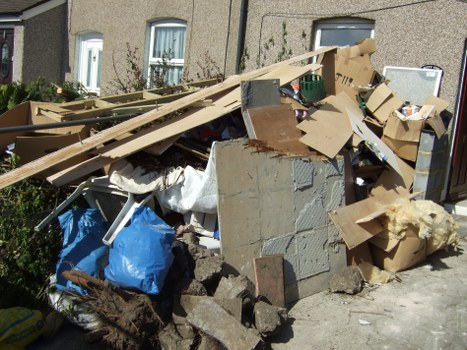
Not every item from an office clear-out belongs in the same category. Some furniture is simply worn out, some equipment is out of date and some pieces may still be useful elsewhere. A thoughtful clearance considers that difference before anything is removed. The aim is to deal with the items efficiently while making sure the removal route matches the type and condition of the contents.
Office disposal work may include single items or whole runs of identical furniture from a suite or department. This is where a clear and disciplined method helps most. Bulk items can be separated by type, taken down in stages and moved without creating unnecessary clutter in shared areas. Furniture disposal is a relevant option when the main task is to remove desks, seating or storage that cannot remain in use.
In some offices, a small number of reusable items may be earmarked for redeployment elsewhere in the business or passed on for reuse if they remain in good condition. We can work around those decisions by keeping hold of items that are to stay and clearing the rest in a measured sequence. That keeps the office environment orderly and supports a better handover when the premises are being returned or reconfigured.
Garage, store and overflow areas linked to office premises

Many office clearances are not limited to the main workrooms. Stores, cupboards, basements, side rooms and outbuildings often hold the overflow that has accumulated over time. Those areas can include old chairs, boxed supplies, display material, seasonal items, archive containers and spare fixtures. They may not be visible at first glance, but they often make a major difference to how complete the clearance feels once the job is done.
Where office premises have ancillary storage areas, the work benefits from being approached with the same level of sorting as the main workspace. Items that are clearly office furniture can be removed together, while mixed contents may need to be separated into smaller groups so that the right handling method is used for each type of material. Garage clearance can be relevant where the storage area is separate from the main office and needs its own clear-out plan.
These spaces are often best managed once the main working areas have been assessed, because they can reveal extra items that were not part of the original list. If you are arranging an office clearance in Wallington, it is worth noting any additional rooms or external storage so that the full scope is understood from the start. That helps avoid incomplete removal and reduces the chance of returning to the site for overlooked items later.
Recycling, sorting and responsible handling
Not everything removed during an office clearance has the same destination. Some materials may be suitable for recycling, some may need disposal and some may be checked for reuse before anything else happens. A sensible sorting process helps keep the work more orderly and avoids treating mixed contents as if they were all identical. That matters particularly in offices, where furniture, metals, plastics, cardboard and paper may all be present in the same room.
We focus on practical handling rather than dramatic claims. The important point is that items are looked at according to what they are, how they are built and whether they can be separated efficiently. A clean clearance usually depends on that judgement as much as it depends on lifting and carrying. Recycling and sustainability explains more about the broader approach to separating suitable materials where that is relevant.
What clients often decide before a clearance
Before the work begins, many clients find it useful to identify anything with a special status: items to retain, items to relocate, items that need review and items that can be cleared without further sorting. That small amount of preparation can save time on the day and reduce the risk of anything useful being removed accidentally. It also makes it easier to manage different rooms if the office is being emptied in stages rather than all at once.
About Wallington
Wallington is a town in the London Borough of Sutton, in south London, with a history shaped by its shift from a rural settlement to a suburban community connected by rail and road. The area grew significantly during the late nineteenth and early twentieth centuries as housing development spread across what had previously been more open land, and its present-day character reflects that layered history. Older traces survive alongside later residential streets, local shopping routes and civic buildings that speak to different phases of growth. The town centre is arranged around a compact commercial core, while surrounding streets contain a mix of interwar houses, later infill development and community facilities. Wallington station has long supported local travel, and the surrounding streets form part of a settled suburban pattern that links the town with neighbouring parts of Sutton and Croydon. Local green spaces, including Beddington Park nearby and smaller neighbourhood open areas, contribute to the town’s everyday landscape. The place also has a number of churches, schools and community venues that support its civic life, while the main roads carry the steady flow of local movement through and around the centre. As with many south London towns, Wallington combines a practical high street with residential calm, and the built environment reflects a gradual evolution rather than a single planned design.
Handover, access and practical clearance decisions
Office clearances are easier to manage when the access route is understood in advance. That includes lifts, stairs, internal fire doors, shared entrances, parking arrangements and any restrictions on loading or timing. The aim is not to complicate the job, but to avoid unnecessary delays and protect the parts of the premises that are staying in use. A careful sequence can make even a busy site feel much more manageable.
When the clearance is tied to a handover, the finish matters as much as the removal itself. The space should be left clear of the agreed items and ready for whatever comes next, whether that is cleaning, decoration, refurbishment or occupation by another team. House clearance may be a useful comparison for understanding a room-by-room approach, although commercial spaces usually involve different contents and access patterns. If you already know the broad scope, it is straightforward to request a quotation and plan the work around it.
We can help with clearances that involve a single office, a suite of rooms or several connected areas within one premises. Keep the main decisions simple and practical, and the job becomes easier to organise. When you are ready, a brief enquiry is enough to start the conversation and arrange the right next step.
Related clearance services for mixed premises
If an office sits within a wider building or a property that also includes storage, domestic-style rooms or mixed-use areas, it can be useful to think about the clearance in separate sections. That way, each area is handled in a way that matches its contents instead of forcing everything into one broad category. Offices often share space with cupboards, break-out areas or underused rooms that are better tackled as distinct parts of the same job.
Where the work extends beyond standard office contents, we can adapt the clearance plan to fit the premises. Some customers only need a focused office furniture removal, while others need a fuller emptying of several parts of a building. Home clearance is not an office service, but the idea of a structured room-by-room approach can still be useful when planning a mixed-property job. Use the scope that suits the site, not a one-size-fits-all method.
When a broader clearance plan is worth considering
A broader plan is usually sensible when there are multiple types of space to deal with, when the premises have built up over time or when some areas need sorting before they can be cleared. In those cases, it is better to work from a simple inventory of spaces than to rely on assumptions about what is inside them. That helps the removal stay orderly, keeps useful items from being overlooked and makes the final outcome easier to check.
Requesting a quotation for office clearance
When you are asking for a quotation, it is helpful to describe the rooms, the main items involved and any access points that matter. A few notes about floors, lifts, loading space and whether items need dismantling can make the estimate more accurate. If you are unsure what to include, a short outline of the office and its contents is enough to begin with, and any remaining detail can be clarified afterwards.
For a straightforward office clearance in Wallington, a quotation is usually easier to discuss when the scope is described in clear categories: furniture, files, electronics, storage items and any extra areas outside the main workrooms. Clear information does not need to be lengthy; it just needs to be specific enough for the work to be understood. If you are ready to take the next step, send the details through and ask for a quotation that matches the premises.
Request a quotation today and give us a simple outline of what needs clearing. We will use that to discuss a practical plan and the right approach for your office clearance.