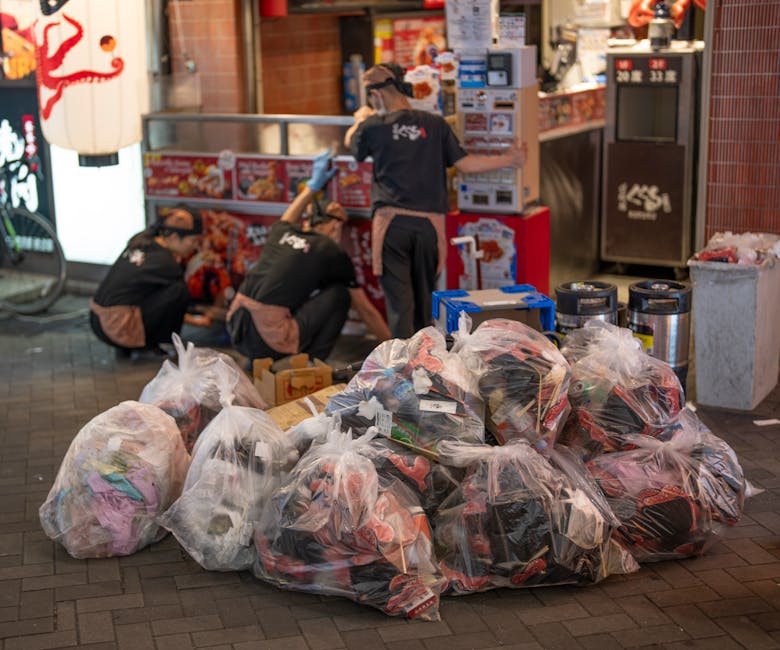
Wallington High Street shop rubbish clearance for retailers: a practical guide for busy stores
If you run a shop on or near Wallington High Street, you already know the awkward side of retail: packaging piling up before opening, old display stock gathering dust in the back room, and broken fittings somehow becoming "temporary storage" for weeks. Wallington High Street shop rubbish clearance for retailers is really about getting that clutter out quickly, safely, and without disrupting trading. Done properly, it keeps your shop floor presentable, your stockroom workable, and your team less stressed. And yes, that matters more than people think.
This guide breaks down how local shop clearance works, what retailers should prepare for, where the usual headaches appear, and how to handle waste in a way that feels organised rather than chaotic. Let's face it, a tidy store is easier to run, easier to sell from, and a lot nicer to walk into on a Monday morning.
- Why it matters
- How it works
- Key benefits
- Who needs this
- Step-by-step guidance
- Expert tips
- Common mistakes
- Tools, resources and recommendations
- Law, compliance and best practice
- Options and comparison
- Case study
- Practical checklist
- Conclusion
- Frequently asked questions
Why Wallington High Street shop rubbish clearance for retailers Matters
Retail waste is not just "stuff to throw away". It affects how customers see your business, how safely staff can move around, and how quickly your team can reset the shop for the next delivery or promotion. On a busy high street, where space is always at a premium, rubbish has a habit of becoming visible fast. A stack of broken shelving in the back, torn cardboard by the doorway, or a smell from stored packaging can quietly drag down the whole impression of the shop.
That is especially true for smaller retailers. Independent stores often use every spare corner for inventory, seasonal displays, returns, and last-minute promotions. When waste starts sharing that space, the whole system slows down. People trip over things. New stock is harder to receive. Staff spend time moving clutter instead of serving customers.
There is also the practical side. Commercial waste needs to be managed properly, and a retail environment tends to produce more mixed materials than people expect: cardboard, plastic wrap, damaged stock, old signs, obsolete point-of-sale units, storage fixtures, and sometimes heavy items like metal racks or display cabinets. A decent clearance plan keeps all of that under control rather than letting it snowball.
Expert summary: For retailers, clearance is not just about removing rubbish. It is about protecting trading space, reducing safety risks, and keeping the store ready for customers and deliveries with as little fuss as possible.
In our experience, the retailers who stay on top of clearance tend to make fewer rushed decisions. They know what stays, what goes, and what needs to be removed before the next rush. That sounds simple. It is simple, really. But it takes a bit of discipline.
How Wallington High Street shop rubbish clearance for retailers Works
Most retail rubbish clearance jobs follow a straightforward process. The details vary depending on the shop size, volume of waste, and whether you are clearing back-of-house clutter, old furniture, or stock left over after a refit. Still, the basic flow is usually the same.
1. Initial assessment
The first step is understanding what needs to go. That might sound obvious, but mixed retail waste can be a headache if nobody has sorted it in advance. A proper assessment looks at volume, access, item types, and whether anything needs special handling. For example, an old checkout counter is a different job from a few bags of packaging.
2. Access planning
High street locations often come with tricky access. You may have narrow entrances, shared service yards, limited parking, or busy pedestrian traffic. Planning how waste will be moved matters a lot. If collections are timed badly, staff can end up wrestling with boxes at the same moment customers are coming through the door. Not ideal, to be fair.
3. Sorting and segregation
Good clearance teams separate general rubbish, recyclable materials, reusable items, and bulky waste where possible. This is not just tidy practice; it helps reduce landfill use and keeps the process cleaner overall. It also makes the work faster when different types of waste are already grouped together.
4. Removal and loading
The clearance team removes items from the shop, stockroom, cellar, or storage space and loads them safely. If there are heavy items, they should be moved with the right lifting methods and equipment. Retail spaces often have delicate surfaces, so careful manoeuvring matters. A scuffed floor after a clearance is the sort of thing everyone notices.
5. Disposal, recycling, and final tidy-up
After collection, the waste is taken away for disposal or recycling as appropriate. A proper service should leave the space swept through and ready for use again. You want a room you can actually work in, not just a room where the rubbish has moved somewhere else.
If your shop clearance includes old fixtures or worn-out furnishings, it can help to look at related services such as furniture disposal or furniture clearance. For broader business waste needs, business waste removal may be a better fit. If the job is larger than expected, waste removal can cover a wider mix of materials and bulkier loads.
Key Benefits and Practical Advantages
Retail rubbish clearance is not glamorous. Nobody opens a shop because they love getting rid of broken shelves. But the benefits are real, and they show up quickly.
- Better first impressions: customers notice a clean, organised shop before they notice the price of anything.
- Safer working areas: fewer trips, fewer awkward stacks, fewer blocked pathways.
- More usable storage space: a cleared stockroom is surprisingly powerful. You can actually find things.
- Improved staff productivity: less time shifting rubbish around means more time selling and restocking.
- Cleaner seasonal resets: ideal after promotions, window changes, or product refreshes.
- Less stress during busy periods: clutter has a way of multiplying when you are short on time.
There is also a morale boost that people often underestimate. Staff work differently in a tidy environment. The shop feels lighter. The morning shift feels less grim. And if you have ever stepped into a back room full of flattened boxes and old display stands, you will know exactly what I mean.
For shops replacing older interiors, it may also help to think beyond waste and into the wider clearance picture. If a refit has left you with mixed store items, the most efficient approach is often to combine rubbish clearance with related services such as office clearance for back-office areas or builders waste clearance after shopfit work. That keeps the whole project moving instead of splitting it into awkward fragments.
Who This Is For and When It Makes Sense
This kind of clearance is useful for a wide range of retailers, not just large chains. In fact, smaller independent businesses often feel the impact more sharply because every square metre counts.
Retailers who commonly need shop rubbish clearance
- Independent convenience stores
- Clothing shops and boutiques
- Card, gift, and stationery shops
- Hair and beauty retailers
- Pharmacies and health shops
- Specialist food stores
- Pop-up shops and temporary units
- Businesses preparing for a refit or seasonal change
Typical situations that trigger a clearance
- New stock has arrived and the old packaging is overwhelming the back room
- You have old shelving or damaged fixtures to remove
- A promotion has ended and display materials need clearing
- You are closing, relocating, or downsizing
- There has been a delivery build-up after a busy trading week
- The storage room has become a bit of a graveyard for "we might need that later" items
Truth be told, the "later" pile is usually where shop waste becomes a real problem. One broken pallet, one spare cabinet, one stack of cardboard that nobody had time to flatten. Then suddenly the room is full.
If your business sits above or beside a shop and you need to clear other spaces too, some retailers pair this work with flat clearance, home clearance, or house clearance where mixed-use premises are involved. It depends on the site, but it is worth thinking holistically rather than room by room.
Step-by-Step Guidance
If you want a clearance process that runs smoothly, a little planning goes a long way. Here is a practical approach that works well for retailers.
- Walk the site and identify everything that needs removing. Separate packaging, general waste, fixtures, stock, and anything heavy.
- Decide what can be reused or sold. Some shop fittings, shelving, and display items still have life left in them.
- Clear pathways and access points first. This makes the rest of the job safer and quicker.
- Group items by type. Cardboard with cardboard, plastics with plastics, bulky items together. Simple, but effective.
- Check for awkward items. Mirrors, glass, old lighting, metal racks, and electrical items may need extra care.
- Choose the right removal option. A small bagged waste job is different from a full shop strip-out.
- Schedule the work around trading hours. Early morning, after closing, or quieter midweek windows usually cause less disruption.
- Do a final sweep. This is the bit people skip. Don't. A small amount of dust or tape left behind makes the space feel unfinished.
That last sweep sounds minor, but it changes everything. Customers can tell when a shop has been cared for. Even the smell is different. Cleaner. Less cardboard, less dust, less old plastic.
If you are comparing your options, it helps to request pricing in a way that reflects the real job. The page on pricing and quotes is useful as a starting point if you want to understand how to prepare the job properly before asking for a number.
Expert Tips for Better Results
A few small decisions make retail clearance much smoother. These are the things that tend to save time and reduce friction.
Keep a waste station near the source
If you are unboxing stock every day, set up a simple waste point near the receiving area. A box for cardboard, a bag or bin for soft packaging, and a separate spot for broken or unwanted items can stop clutter spreading through the store.
Book removals before the backlog becomes visible
Retail waste is easier to deal with when it is still contained. Once it spills into customer-facing areas, you are reacting instead of managing. And reacting is always more expensive in time, if not in money.
Separate bulky items early
Old stands, mannequins, broken cabinets, and display counters take up a lot of room. Pull them out of the mix early and you will immediately feel the difference. It is one of those small wins that changes the day.
Think in terms of trading flow
Ask yourself: will this clearance help the store trade better tomorrow? If the answer is yes, the job is probably worth prioritising. If not, you may be looking at items that could wait for a broader refit or combined removal.
Use the quieter hours
Most high street shops are better served by clearance outside peak customer times. Early starts can be surprisingly effective. You open the shutters to a clear floor, and the whole day feels better. Simple as that.
For retailers with a broader footprint, it can also be sensible to compare retail waste clearance with office clearance for admin areas or storage rooms. A business often has more than one type of clutter, and the smartest approach is often the one that covers several at once.
Common Mistakes to Avoid
Retailers usually do not make huge mistakes with clearance. More often, it is a series of small ones that create frustration later.
- Leaving waste until it blocks stock movement. This slows everything down.
- Mixing recyclable materials with general waste. It makes sorting harder and usually more expensive.
- Forgetting about access. A pile may fit in the stockroom but still be awkward to remove through a narrow doorway.
- Ignoring heavy or awkward items. Anything bulky should be handled carefully, not dragged across a floor at the last minute.
- Not planning around customers. Shop clearance should not make the front of house feel like a building site.
- Assuming every item can be handled the same way. Old furniture, mixed waste, and stock returns all have different handling needs.
One small but common issue is underestimating how much packaging a busy store creates. It is almost funny, in a slightly annoying way. You clear it on Tuesday, and by Friday there is another mountain waiting. That is retail life, I suppose.
Tools, Resources and Recommendations
You do not need a massive toolkit to manage retail waste well. But a few practical tools make everyday handling easier and safer.
Useful tools on site
- Heavy-duty sacks or bins for general waste and packaging
- Flattening tools such as box cutters or safe breaking tools for cardboard and cartons
- Labels or colour coding to separate waste streams
- Trolleys and sack trucks for moving items without carrying everything by hand
- Gloves and protective footwear for staff dealing with sharp edges or heavy items
Useful service pages to review
If your clearance includes old chairs, display units, or back-room furnishings, the pages for furniture clearance and furniture disposal can help shape the job. For mixed waste or bulkier retail debris, waste removal remains the most flexible option. If your clearance follows a refurbishment, builders waste clearance is worth considering too.
If you want to understand the wider standards around how a provider handles your waste and safety concerns, the pages on recycling and sustainability, health and safety policy, and insurance and safety are sensible places to look. They help set expectations before anything is booked.
Law, Compliance, Standards, or Best Practice
Retail waste clearance touches on practical compliance matters, even if your main focus is just getting the shop back in order. In the UK, businesses are expected to manage commercial waste responsibly, keep relevant records where required, and make sure waste is handled by people or services that are appropriate for the job. The exact obligations can vary depending on the material and the circumstances, so it is wise to treat compliance as a working habit, not a one-off chore.
For retailers, best practice usually means:
- keeping waste types separate where feasible
- avoiding fly-tipping risks by using reputable removal arrangements
- storing waste safely before collection
- protecting staff and customers from obstructions and sharp edges
- making sure any special waste is identified and handled properly
Some shop waste is straightforward, but not all of it. Old fittings may have fixings, glass, electrical components, or heavy frames. Packaging can hide sharp staples and broken plastic. Even a simple-looking pile can be awkward. Better to check than guess.
Best practice also applies to the way the clearance is carried out inside the shop. Floors should be protected where needed, routes should be kept clear, and staff should know who is doing what. A calm plan beats a rushed scramble every time.
If you want to review operational details before arranging a clearance, the site's pages on terms and conditions and payment and security can help you understand how the service is structured and what to expect.
Options, Methods, or Comparison Table
Retailers usually have a few ways to deal with rubbish and unwanted shop items. The right choice depends on volume, item type, access, and how quickly the space needs to be back in use.
| Method | Best for | Strengths | Limitations |
|---|---|---|---|
| In-house staff disposal | Very small volumes of bagged waste | Low immediate cost, simple for minor day-to-day rubbish | Uses staff time, not ideal for bulky or heavy items |
| Scheduled commercial waste collection | Regular cardboard, packaging, and general retail waste | Predictable, tidy, good for routine waste streams | Less suitable for one-off bulky clearances |
| One-off retail clearance | Stockroom clean-outs, refits, closures, bulky items | Fast, flexible, handles mixed waste well | Needs proper planning and access coordination |
| Combined clearance and removal | Mixed retail, fixtures, and back-office waste | Efficient for bigger jobs, fewer moving parts | Requires clearer sorting and a slightly broader brief |
For many retailers, the third option is the sweet spot when the problem is no longer "everyday waste" but not yet a full closure. If you are dealing with a shop refit, a stockroom reset, or a space that has quietly got out of hand, a one-off clearance is often the cleanest solution.
Case Study or Real-World Example
A small retailer on a busy high street had been stacking packaging, damaged display pieces, and old stock fixtures in the back room for months. Nothing dramatic. Just the usual "we'll deal with it later" kind of build-up. By the time they asked for help, the room had become awkward to use during deliveries, and staff were spending valuable time moving things around just to reach the newest stock.
The clearance was handled in stages. First, the access route was cleared. Then the bulky items were removed, followed by cardboard, mixed packaging, and old shop fittings. A final tidy left the room usable again the same day. The practical result was not just more space. Staff could restock without juggling around clutter, and the whole delivery process became less stressful.
That kind of outcome is more common than people think. Usually, the issue is not the amount of rubbish alone. It is the knock-on effect on how the shop runs. One blocked doorway, one awkward pile, one lost trolley route. Then the job starts affecting everything else.
It is a small example, but it captures the point: clearance is operational, not cosmetic. Both matter, of course. But the operational side is what saves you time.
Practical Checklist
Use this checklist before booking or starting a shop rubbish clearance.
- Identify all waste types, including bulky items and fixtures
- Separate reusable stock from true rubbish
- Check whether any items need careful handling
- Clear access routes and measure tight spaces if needed
- Decide whether the job needs to happen outside trading hours
- Group items by type where practical
- Confirm what should be taken away and what should stay
- Prepare staff so nobody is working around the wrong pile
- Plan for a final sweep after removal
- Review whether the clearance overlaps with other services
A simple checklist sounds basic, but it prevents the classic last-minute panic of "oh, that cabinet needed to stay" or "where did all this extra packaging come from?" Been there. Not fun.
Conclusion
Wallington High Street shop rubbish clearance for retailers is one of those tasks that quietly improves almost everything else. It frees space, reduces friction, supports safer working conditions, and helps your shop look cared for rather than crowded. The best results come from planning ahead, separating waste sensibly, and choosing the right clearance method for the job rather than just the fastest-looking one.
If your stockroom is getting tight, your packaging pile is growing faster than you can flatten it, or your shop is due for a reset, don't wait until the clutter starts affecting trade. A little action now tends to save a lot of hassle later. And honestly, a cleaner shop just feels better to work in.
Get a free quote today and see how much you can save.
For retailers who want a more organised, less stressful way to handle waste, the right clearance plan can make the whole week run smoother. Little wins count, especially on a busy high street.
Frequently Asked Questions
What is Wallington High Street shop rubbish clearance for retailers?
It is the removal of unwanted waste, packaging, old fixtures, damaged stock, and bulky retail items from shops on or near Wallington High Street. The aim is to keep the premises clean, safe, and workable without interrupting trading more than necessary.
Is retail rubbish clearance the same as regular business waste collection?
Not quite. Regular business waste collection is usually for ongoing bagged or sorted waste. Retail clearance is more of a one-off or project-based job, often involving bulky items, stockroom clutter, or mixed materials that need to be removed in a single visit or short series of visits.
What kinds of items can usually be removed from a shop?
Common items include cardboard, packaging, damaged stock, shelving, display units, old counters, storage furniture, mannequins, and general mixed rubbish. If items are heavy, awkward, or part of a refit, it helps to mention that early so the job can be planned properly.
Can shop rubbish clearance be done outside trading hours?
Yes, and often that is the best approach. Early morning, late evening, or quieter midweek times can reduce disruption to customers and staff. It is usually easier to move bulky items when the shop is not busy.
How do I prepare my shop before clearance day?
Walk the space, identify what is going, separate reusable items, clear access routes, and make sure staff know what will happen. If possible, group waste by type. A few minutes of preparation can save a surprising amount of time later.
What should retailers do with old furniture or fittings?
Old furniture and fittings should be separated from general waste where possible. Depending on what they are, they may be suitable for furniture clearance, furniture disposal, or a broader waste removal service. If the items came from a refit, builders waste clearance may also be relevant.
Is retail rubbish clearance useful for small independent shops?
Absolutely. In fact, smaller shops often benefit the most because space is tighter and every storage area matters. A cleared stockroom or back room can make daily trading far easier.
How do I know if I need a one-off clearance or a routine waste service?
If your problem is ongoing cardboard, packaging, and general rubbish, a routine commercial arrangement may be enough. If you are dealing with clutter, a refit, a closure, or bulky items that need to go quickly, a one-off clearance is usually the better fit.
Does shop clearance help with safety as well as tidiness?
Yes. Removing clutter improves access, reduces trip hazards, and helps staff move more safely through the premises. In a busy retail setting, that is a real operational advantage, not just a nice extra.
What should I ask before booking a clearance service?
Ask what items can be taken, how access will be handled, whether sorting is needed, how the waste will be managed, and what the schedule looks like. If you want clearer expectations on process and service structure, it also helps to review the site's pricing and quotes information before you commit.
Can retail clearance include stockroom and back-office areas too?
Yes. Many shop clearances include back-of-house spaces, storage rooms, and small office areas. In some cases, combining retail waste with office clearance is the most efficient way to deal with the whole premises in one go.
What is the best first step if my shop is already overflowing with waste?
Start by separating anything valuable, reusable, or sensitive from the actual rubbish. Then clear access routes and decide which items are bulky or urgent. After that, arrange removal as soon as practical. The sooner you shrink the pile, the less intimidating it becomes. Honestly, that first pass makes a bigger difference than people expect.